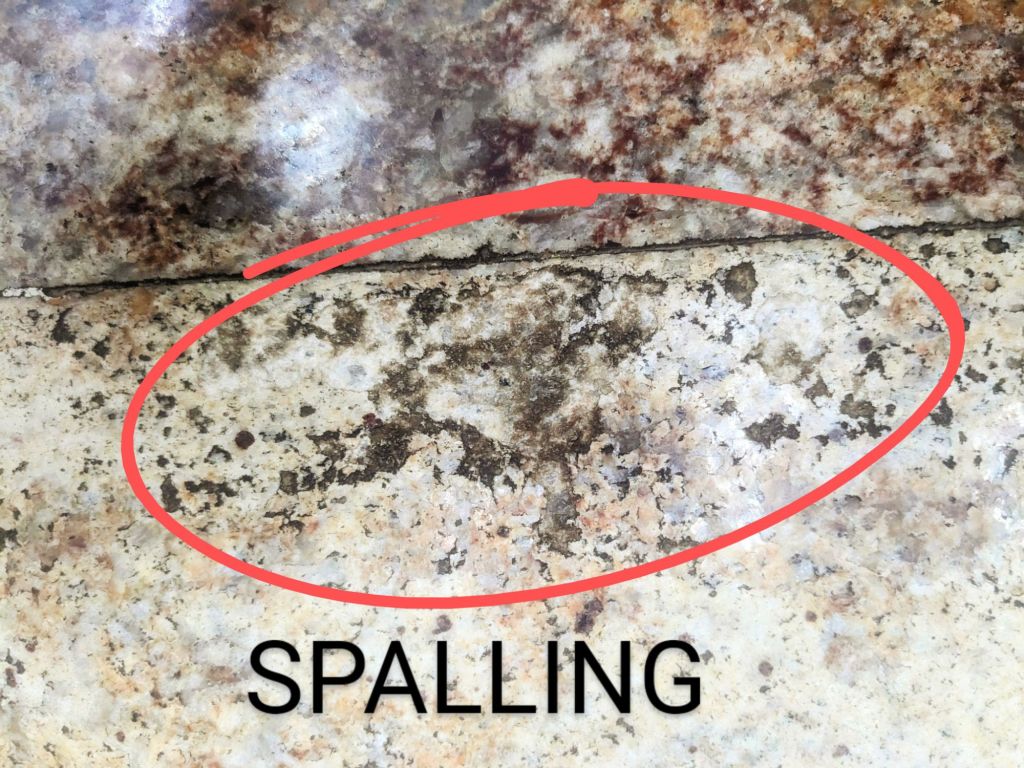
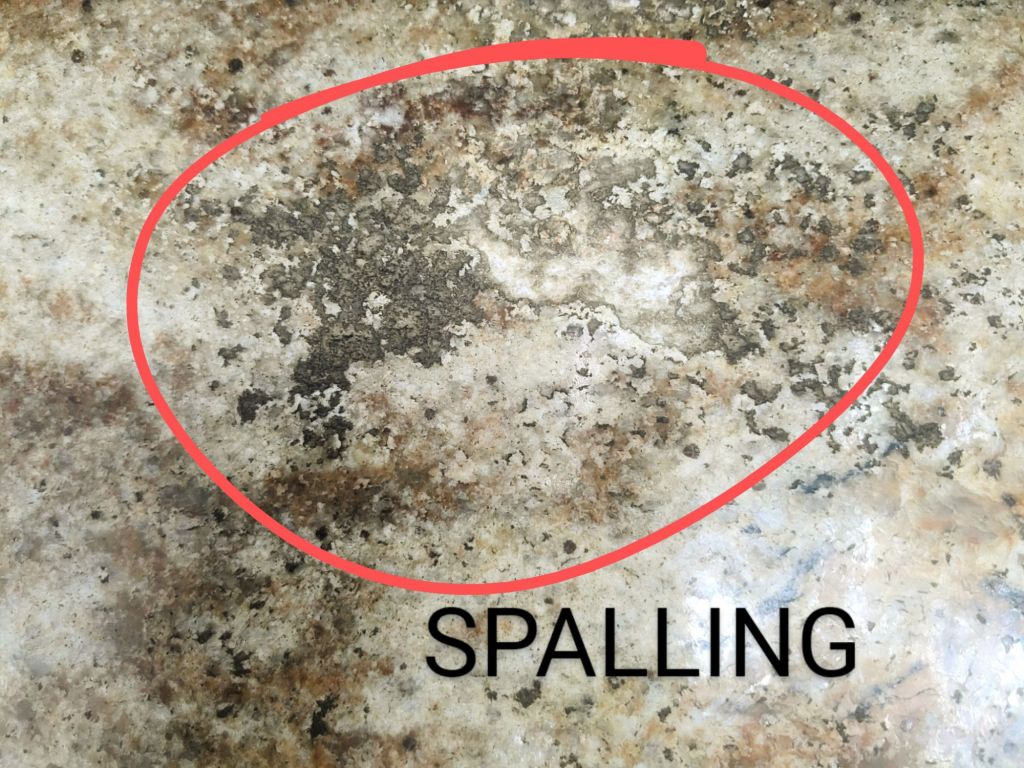
Understanding and Prevention of Granite Spalling:

Granite Flooring is mostly preferred in construction projects for its longevity and ability to retain its polished finish despite external abuse.

In many Indian homes that have installed Granite Flooring, it is a common complaint that the floors start deteriorating after a few years, only in the ground floor installations while the granite flooring on the first floor (excluding those in wet areas) retain their polished finish for several years. This is mostly common in buildings situated in areas that have huge variations in rainfall, i.e. prolonged dry spells followed by heavy rainfalls with waterlogging around the building.

This is observed more commonly in buildings that are kept closed for prolonged periods with restricted airflow resulting in lack of humidity regulation.

To understand the issue, it is essential to understand that natural stone slabs are porous in nature and will be subject to capillary action i.e. flow of fluids from an area of higher concentration towards area of lower concentration. (Imagine a dry sponge absorbing water)

Especially in countries like India, where wet laying method is practiced, this is very common.

There are ways to prevent this:

1. Choose dry laying method.
2. Seal the flooring surface with concrete before laying the flooring.
3. Choose double sealed slabs i.e. slabs that are sealed on both sides using epoxy resin sealant.

Among the above, the most practical and economical option would be to install double sealed slabs. These are slabs that are sealed on both the front and the back with epoxy resin sealant making the slab non porous.

Though initial cost may be an additional 1-2% per Sq.M relative to the non sealed option, the polish on the slabs will last a lifetime.
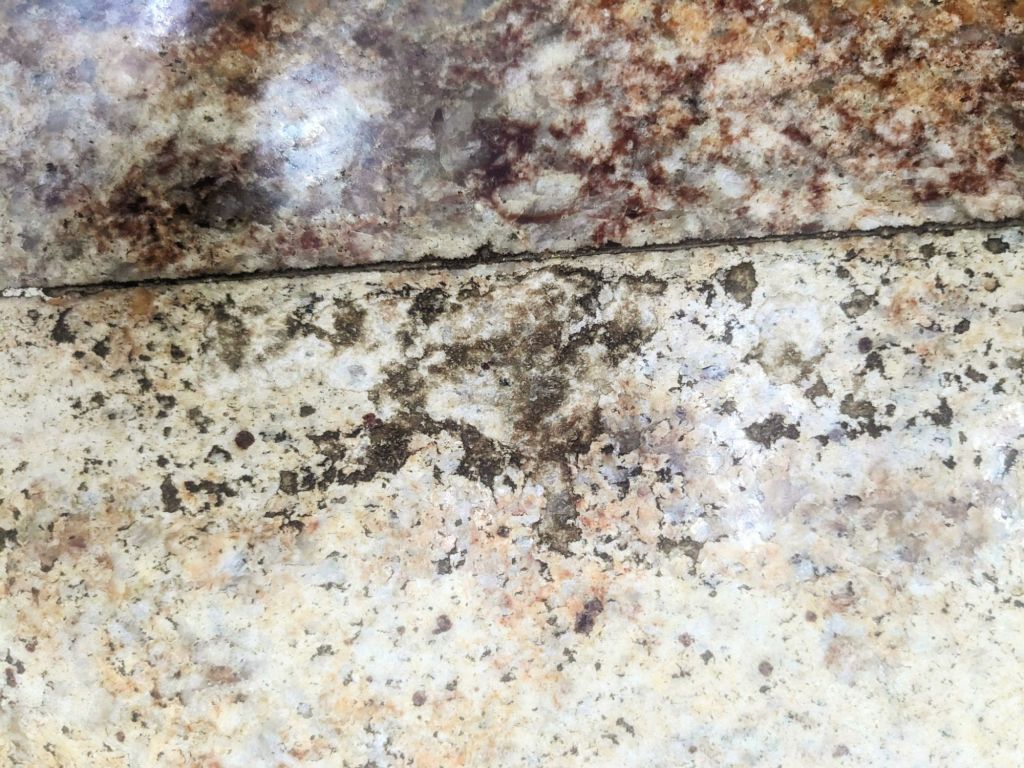
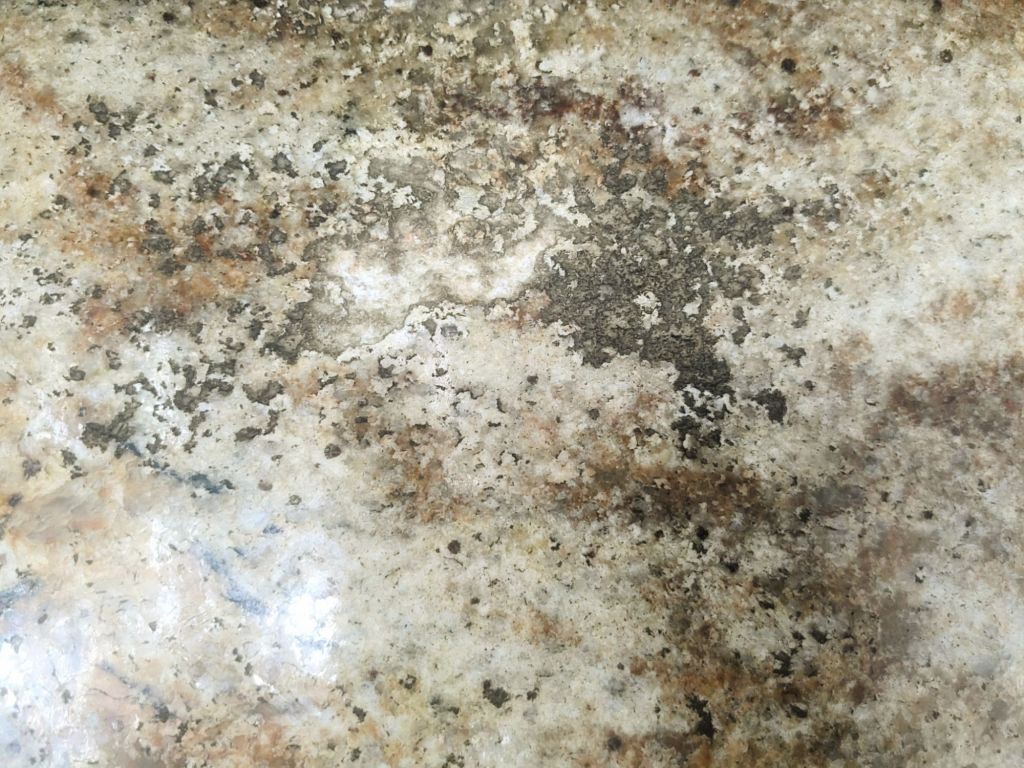
Granite Flooring Deterioration (Spalling)

Oftentimes, there are complaints from many clients regarding the longevity of the granite flooring. The main reason being that the polished surface of the granite slabs start deteriorating after a while.

The major cause of deterioration of Granite flooring, especially in countries like India is spalling and efflorescence on the granite slabs.  

This is normally a symptom of having a moisture problem; meaning the stone is being subjected to excessive moisture from beneath it.   Water is migrating from perhaps outside of your house through the concrete slab and up through the granite stone.   As the water travels through the soil, concrete, and stone it picks up minerals (salts) that dissolve in the water.  When the water  evaporates at the stone surface the minerals precipitate into a solid.  Thus it expands causing the spalling or deterioration of the stone surface.  It also leaves the precipitation on the stone surface which is called efflorescence which is normally white in color.

The solution is to stop the source of the moisture.  Some times that means fixing a leaking water pipe or installing a French perimeter drain around your house to divert the water.  Because you do have a natural stone it can be restored by having a professional stone restoration company come in and re-grind and polish the stone.

Granite For Outdoor Steps:

The usage of granite for outdoor steps has become increasingly fashionable in today’s landscaping trends. These stones provide any landscape a touch of elegance and beauty in addition to durability and strength. Natural stone steps may turn a plain outdoor area into a gorgeous focal point when they are installed appropriately. Whether you’re looking to enhance your garden, create an enchanting entrance to your home, or add dimension to your backyard, properly constructed stone steps can be the ideal solution.

When executed with precision and care, natural stone steps have the remarkable ability to elevate a plain and uninspiring outdoor area into a stunning focal point.